Hyperlocal Reach: How Geotags, Local Hashtags, and Community Collabs Grow Small Businesses
Practical tactics — geotags, local hashtag mixes, and community collaborations — plus a 30-day action plan and measurement checklist.
Get an Instagram growth report in 30 seconds with Viralfy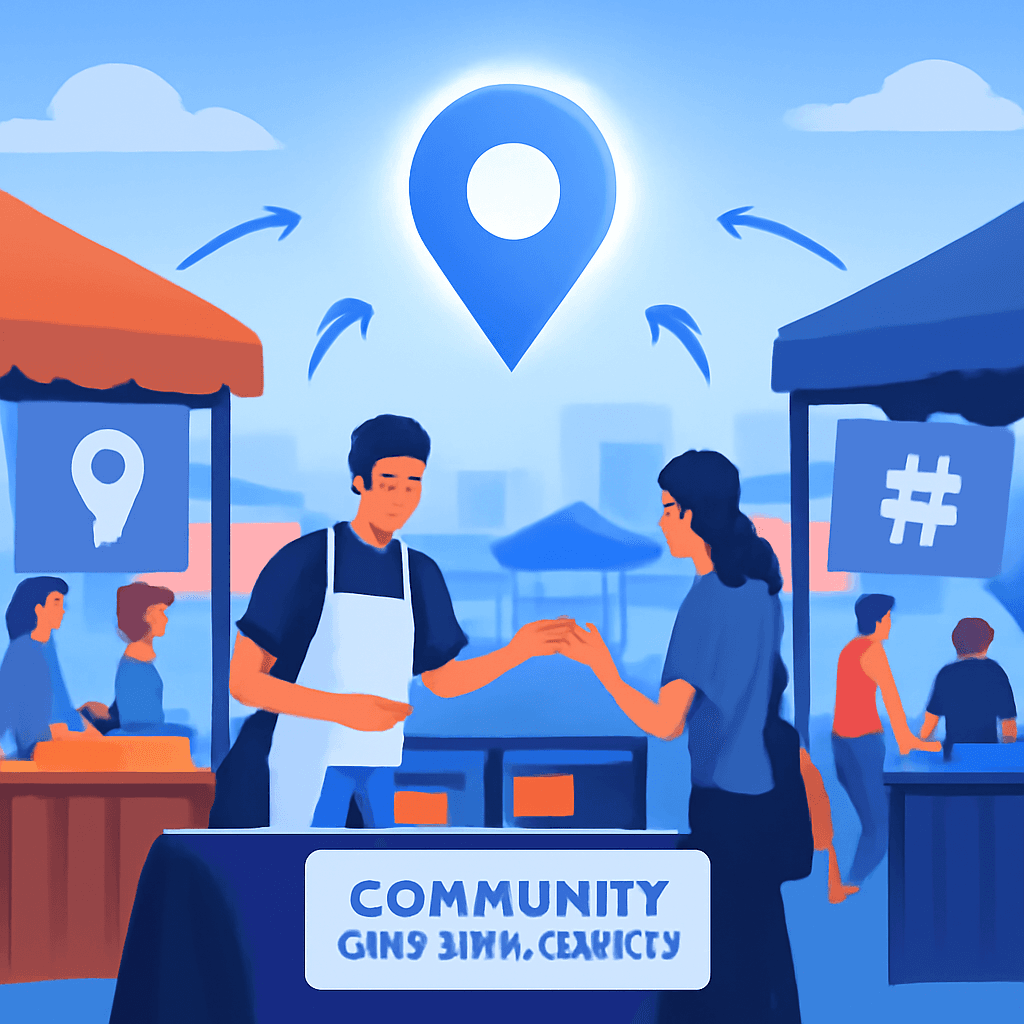
In this article8 sections
- What is hyperlocal reach and why it matters for small businesses
- Why hyperlocal reach matters: data and business impact
- Geotags that actually increase discovery (best practices and examples)
- Local hashtags: research, mix strategy, and lifecycle for hyperlocal reach
- Community collabs: how to build partnerships that drive local engagement
- Measure, test, and iterate: a data-first protocol for hyperlocal reach
- 30-Day Hyperlocal Reach Action Plan (step-by-step)
- Advantages of prioritizing hyperlocal reach (and how Viralfy helps)
What is hyperlocal reach and why it matters for small businesses
Hyperlocal reach is the intentional effort to get discovered by people physically close to your business or service area. This article focuses on hyperlocal reach for Instagram — using geotags, local hashtags, and community collaborations to convert discovery into foot traffic, bookings, or local sales. For small businesses and creators who sell to local customers, hyperlocal reach is often higher intent than broad follower growth: a higher percentage of people who find you locally will take action within days. In practice, hyperlocal reach reduces wasted impressions and accelerates measurable outcomes like walk-ins, calls, appointments, and page visits.
Effective hyperlocal strategies blend creative content with local signals and measurement. That means optimizing location metadata (geotags), building a tested library of neighborhood and niche hashtags, and establishing regular collaborations with nearby creators, venues, and micro-brands. You’ll also need a repeatable testing cycle and tools that show which geotags and hashtags actually deliver non-follower impressions. If you want a data-first approach to testing local tactics, check frameworks like the Instagram Hashtag Research Framework and pair them with a collaboration playbook to scale community partnerships.
This guide is written for creators, influencers, social media managers, and small business marketers who manage Instagram and need a practical, measurable path to local growth. It includes real-world examples, testing protocols, and a 30-day action plan you can implement with or without a full team. Later sections explain exactly how to choose geotags, pick local hashtags, set up community collabs, and measure results with concrete KPIs.
Before we dig into tactics, understand that local discovery behaves differently than broad reach: local impressions often convert faster but require consistent signals. A brand-new coffee shop, for example, can use a repeated mix of neighborhood geotags, 3–4 local hashtags, and weekly micro-collabs with nearby businesses to drive a measurable increase in walk-ins and profile interactions within 30 days.
Why hyperlocal reach matters: data and business impact
Local intent is strong and measurable: Google research shows that a high percentage of “near me” and local searches lead to store visits within a short window, making local discovery a high-ROI channel for small businesses (Think with Google). Instagram amplifies that intent when you combine visual content with precise local signals like geotags and neighborhood hashtags. For brick-and-mortar shops, service providers, and local events, a 10–20% lift in non-follower reach from local discovery can produce outsized business outcomes such as additional reservations or purchases.
Beyond immediate conversions, hyperlocal reach builds a compounding advantage: repeated local discovery increases brand familiarity in a defined area, and that familiarity increases the chance of direct searches and referrals. Social platforms reward consistent local signals; when you keep using the same neighborhood geotags and local hashtag clusters over time, the account develops topical and geographic relevance in algorithmic signals. That means fewer impressions wasted on uninterested audiences and more reach toward people likely to act.
Practically speaking, small business marketers who prioritize hyperlocal reach should watch KPIs beyond likes: profile visits, directions clicks, call/email taps, and non-follower impressions from location and hashtag sources are the metrics that predict local impact. If you want a deeper measurement routine, integrate a weekly review that includes these metrics and compare them against your content pillars — the same approach recommended in the Instagram Content Pillar Strategy to align local posts with business goals.
Finally, data shows that local partnerships magnify reach with low cost: micro-collabs with nearby creators or adjacent businesses often convert their engaged local audiences faster than broad influencer paid campaigns. The rest of this guide covers how to design those partnerships and measure them effectively so you can prioritize what actually moves the needle.
Geotags that actually increase discovery (best practices and examples)
Geotags are one of the simplest, highest-leverage signals for hyperlocal reach. Use precise, repeatable location tags: not just your city but neighborhoods, malls, parks, or the venue name where an event happens. For example, a bakery in Boston should rotate between tags like the shop’s exact location, the neighborhood (e.g., South End), the local market, and a nearby popular landmark. Precision matters: neighborhood and venue geotags often have smaller but more relevant audiences, increasing the chance of meaningful discovery and conversion.
Post types matter when using geotags. Reels with dynamic local footage or Stories with location stickers tend to surface in the location search and the Explore tab for people nearby. Combine geotags with a location-based call-to-action: “Drop by before 3pm for a free sample” or “Book a tasting this weekend — swipe up” (or link in bio). Track which geotags drive visits by monitoring profile actions and non-follower impressions in location-sourced reach; for accounts using Viralfy, location-sourced reach appears in the profile analysis report and helps prioritize winning geotags quickly.
A real-world example: an independent boutique experimented with three geotags for 30 days — store, neighborhood, and nearby mall. Using a weekly scorecard, they tracked non-follower impressions and “get directions” taps. The neighborhood geotag produced the highest conversion rate: 42% more directions clicks per 1,000 impressions than the mall tag. That outcome came from consistent posts pinned to the neighborhood geotag plus two micro-collabs with local creators.
To avoid guesswork, pair geotag experiments with a simple reporting approach. Use the location breakdown in your insights or an audit like a reach-by-source report to compare sources week-to-week. Treat each geotag like an A/B test: keep the creative consistent while rotating the geotag for comparable posts, and log the profile actions that matter most to your business (calls, directions, link clicks).
Local hashtags: research, mix strategy, and lifecycle for hyperlocal reach
Local hashtags are not just city names — they’re a mix of community tags, neighborhood labels, event tags, and niche interest tags. Your goal is to build a hashtag library that balances reach and relevance: include a few larger city tags for discovery, medium-size neighborhood tags, and small hyper-niche tags that indicate intent (e.g., #seattlecoffee, #capitolhillfood, #seattlebakes). A tested, rotating mix prevents overreliance on a single tag and signals consistent topical relevance to the algorithm.
Research begins with three steps: scan local competitors and creators for tags they use, observe which tags appear in top posts for local searches, and use a data-driven framework to group tags by intent and reach. The Instagram Hashtag Research Framework offers a structured approach to build a niche mix; pair that with a lifecycle plan that defines when to test, scale, or retire tags based on performance. Real tests should run for 14–28 days per tag cluster to collect enough non-follower reach and action data.
A practical lifecycle example: start a 14-day test with three hashtag packs (city-wide, neighborhood, and hyper-niche). Record non-follower impressions, saves, shares, and profile visits for each pack. If a pack produces a consistent lift in non-follower impressions and profile actions, scale it into more posts and mark it as a “core” pack. If it underperforms for two consecutive cycles, retire it and replace it with a new candidate from your research pool.
For local businesses, combine hashtags with geotags to compound signals: a neighborhood geotag plus a neighborhood hashtag often outperforms generic city tags. To operationalize this at scale, use an Instagram hashtag testing protocol like the one in our testing playbook — the Instagram Hashtag Testing Protocol shows how to structure repeatable experiments and expected lifts. Document results weekly and fold winning tags into your content calendar.
Community collabs: how to build partnerships that drive local engagement
Community collaborations — micro-influencers, adjacent businesses, local events, and nonprofits — are credibility multipliers in a small area. The right collaboration not only exposes your content to targeted local followers but also produces trust signals that convert. For example, a neighborhood yoga studio can partner with a nearby health cafe for a joint promo: both accounts co-create Reels showcasing an offer, tag the shared location, and cross-promote on Stories. The combined signals often deliver higher-quality traffic than paid ads because the audience overlap is local and interest-aligned.
Start collabs with clear, measurable goals: increase profile visits, collect email sign-ups, drive walk-ins during a specific weekend, or boost bookings for an event. Use short-term pilot collabs with well-defined KPIs and a simple success threshold (e.g., +20% profile visits or 30 extra bookings). For a repeatable system, formalize outreach templates, deliverables, and performance reporting — frameworks like the Instagram Collaboration Playbook provide scripts and role definitions for creators and small brands.
Example workflows include pop-up co-hosting, cross-promoted giveaways targeted to neighbors, and content swaps where each partner posts a behind-the-scenes Reel tagging the other. Measure impact by tracking referral sources and tagging UTM links where relevant for online bookings. For stores, track “mentioned in Stories” and direct messages from collab posts as lead indicators of success; for service providers, track booking codes or time-bound offer redemptions.
Scale the most effective collabs by turning them into monthly or quarterly programs. Maintain a local partner roster with performance notes so you can quickly repeat high-performing pairings. To benchmark competitor and partner performance in your area, use competitive workflows and short audits that identify local winners and creative patterns you can replicate or improve upon — pair that with a fast competitor benchmark to spot themes and gaps quickly.
Measure, test, and iterate: a data-first protocol for hyperlocal reach
Local testing without measurement is guesswork. Define a compact set of KPIs for hyperlocal experiments: non-follower impressions from location and hashtags, profile visits, directions clicks, link clicks/bookings, and conversion events (calls, bookings, in-store redemptions). Use weekly scorecards to compare these KPIs across geotags, hashtag packs, post formats, and collabs. A structured cadence — plan, publish, measure, and iterate every 7–14 days — shortens the learning loop and reveals which local signals reliably drive action.
If you manage multiple accounts or clients, a tool that automates baseline analysis reduces time-to-decision. Viralfy delivers a 30-second profile analysis that surfaces reach, top posts, hashtag signals, posting time recommendations, and competitor benchmarks — making it easier to prioritize which local experiments to run first. Use Viralfy’s baseline to pick the most promising geotags and hashtags, then apply the testing protocol to validate actual local conversions.
For reliable A/B comparisons, keep creative and copy similar while changing only one variable (geotag or hashtag pack). Record sample size — posts should be compared across similar formats and posting days to avoid time-of-day and content-format bias. Over 4–6 posts per variant you’ll accumulate enough data to detect patterns; if a difference persists, promote the winner into your core calendar and run new tests to keep optimizing.
Finally, tie local experiments into monthly reporting that maps actions back to business outcomes. For example, compute cost-per-walk-in or bookings-per-1000-local-impressions to determine ROI. Use a simple attribution sheet to record which posts/collabs generated direct actions, and convert those learnings into content briefs that replicate the format, creative, and local signals that worked best.
30-Day Hyperlocal Reach Action Plan (step-by-step)
- 1
Week 0 — Baseline and local research
Run a quick profile baseline and competitor scan to identify current local reach and potential partners. Use a 30-second analysis to surface top posts and current hashtag/geotag performance, then list 6 nearby creators and 8 local hashtags to test.
- 2
Week 1 — Geotag and hashtag test setup
Publish four posts (mix of Reel and single-image) using the store/location geotag and three different hashtag packs (city, neighborhood, niche). Keep creative similar so location/hashtags are the only variable; start tracking non-follower impressions and profile visits.
- 3
Week 2 — Launch two micro-collabs
Schedule two micro-collabs with local partners (cross-promoted Reel or Story takeover). Define a single KPI for each collab (e.g., 20 profile visits or 15 bookings) and one short-term offer to measure conversions.
- 4
Week 3 — Analyze results and scale winners
Review the weekly scorecard: identify top-performing geotags, hashtag packs, and collab formats. Double down on the winning geotag/hashtag combo and repeat the best collab format. Update your hashtag library and partner roster with performance notes.
- 5
Week 4 — Systematize and document
Create content briefs based on winning creative and signals; build a rotating calendar that repeats the winning geotag + hashtag packs twice per week. Formalize outreach templates for repeat collabs and schedule a monthly review to keep iterating.
- 6
Ongoing — Monthly growth experiments
Every month, retire one underperforming hashtag, test one new partnership format, and run a 2-week A/B test on posting times using your best local signals. Keep a simple ROI metric (bookings or walk-ins per 1,000 local impressions) to prioritize experiments.
Advantages of prioritizing hyperlocal reach (and how Viralfy helps)
- ✓Higher intent discovery: Local discovery often converts faster — more profile visits turn into bookings or walk-ins because the audience is nearby and ready to act.
- ✓Lower wasted impressions: Focusing signals (geotags + local hashtag packs) reduces views from uninterested audiences, improving engagement rates and algorithmic relevance.
- ✓Scalable partnership playbook: Repeatable micro-collabs with documented KPIs create a local referral network that compounds over time.
- ✓Faster testing cycles: With a compact set of KPIs and a 14–30 day testing cadence, you iterate quickly and stop losing time on tactics that don’t convert.
- ✓Data-first prioritization: Tools like Viralfy speed up diagnosis — a 30-second report surfaces top posts, hashtag signals, and posting times so you can prioritize local experiments without analysis paralysis.
- ✓Operational efficiency: A documented hashtag lifecycle and partner roster let small teams replicate winning posts and collaborations consistently.
- ✓Better attribution for local campaigns: Tracking profile actions and redemption codes for in-store offers translates social activity into clear business outcomes.
- ✓Competitive edge: Many local competitors still post without a local testing system; a disciplined hyperlocal approach uncovers quick wins that larger advertisers miss.
Frequently Asked Questions
What is the fastest way to increase local discovery on Instagram?▼
The fastest route is to combine precise geotags with a tested set of local hashtags and one visible local collaboration. Use neighborhood geotags (not just the city) and rotate small hashtag packs that include community and niche tags. Pair that with a micro-collab — a co-hosted Story or a cross-promoted Reel — and measure profile visits and directions clicks over a 7-14 day window to validate impact.
How many geotags and local hashtags should I test at a time?▼
Test small and controlled: rotate one geotag per post and test 2–3 hashtag packs across comparable posts for 14–28 days. Keep creative, format, and posting day similar so you isolate the variable. This limited approach yields clear signal quickly and prevents dilution of results.
Can geotags and local hashtags help service businesses without a storefront?▼
Yes. Service businesses should use service-area geotags (neighborhoods you serve), event locations, and community tags relevant to target neighborhoods. Highlight client success stories, local case studies, or time-bound offers for residents. Measure outcomes with DM leads, booking link clicks, and demo requests tied to those localized posts.
How do I track whether a community collab drove real business outcomes?▼
Define the conversion event before the collab: a booking code, a link click, a reservation, or an in-store coupon redemption. Use trackable links or unique offer codes and monitor profile actions and messages during the promotion window. After the collab, compare short-term spikes to baseline weeks and compute bookings or redemptions per 1,000 local impressions to understand ROI.
How often should I update my local hashtag library?▼
Review and refresh your local hashtag library monthly. Run a 14-day test for new tags and retire underperformers after two failed cycles. Keep a categorized library (city, neighborhood, niche, event) and mark each tag with recent performance notes so your team can reuse top performers reliably.
What KPIs best indicate success for hyperlocal reach?▼
Prioritize non-follower impressions from location and hashtags, profile visits, directions clicks, link clicks/bookings, and direct messages related to offers. For brick-and-mortar, directions and calls are primary indicators; for service businesses, booking link clicks and submissions matter most. Track these KPIs weekly and convert them into simple ROI metrics like bookings per 1,000 local impressions.
How can Viralfy help improve hyperlocal reach experiments?▼
Viralfy accelerates the learning loop by providing a 30-second profile analysis that surfaces which posts and hashtags already drive reach, plus competitor benchmarks to reveal local winners. Use the baseline to prioritize geotags and hashtag packs with the best signal, then apply a structured testing cadence to validate results. Viralfy’s insights make it faster to stop low-value experiments and scale what actually increases local discovery.
Start growing local discovery today
Run a 30-second Instagram analysis with ViralfyAbout the Author

Paid traffic and social media specialist focused on building, managing, and optimizing high-performance digital campaigns. She develops tailored strategies to generate leads, increase brand awareness, and drive sales by combining data analysis, persuasive copywriting, and high-impact creative assets. With experience managing campaigns across Meta Ads, Google Ads, and Instagram content strategies, Gabriela helps businesses structure and scale their digital presence, attract the right audience, and convert attention into real customers. Her approach blends strategic thinking, continuous performance monitoring, and ongoing optimization to deliver consistent and scalable results.